“I Thought I Knew Surgery, Until I Saw the Prometric Vignettes”: A Plastic Surgeon’s Redemption Story
- by SEO Manager
- 1 day ago
Explore a Plastic Surgeon’s journey from struggling with Prometric clinical vignettes to building confidence through focused practice, targeted MCQs, and realistic mock exams.
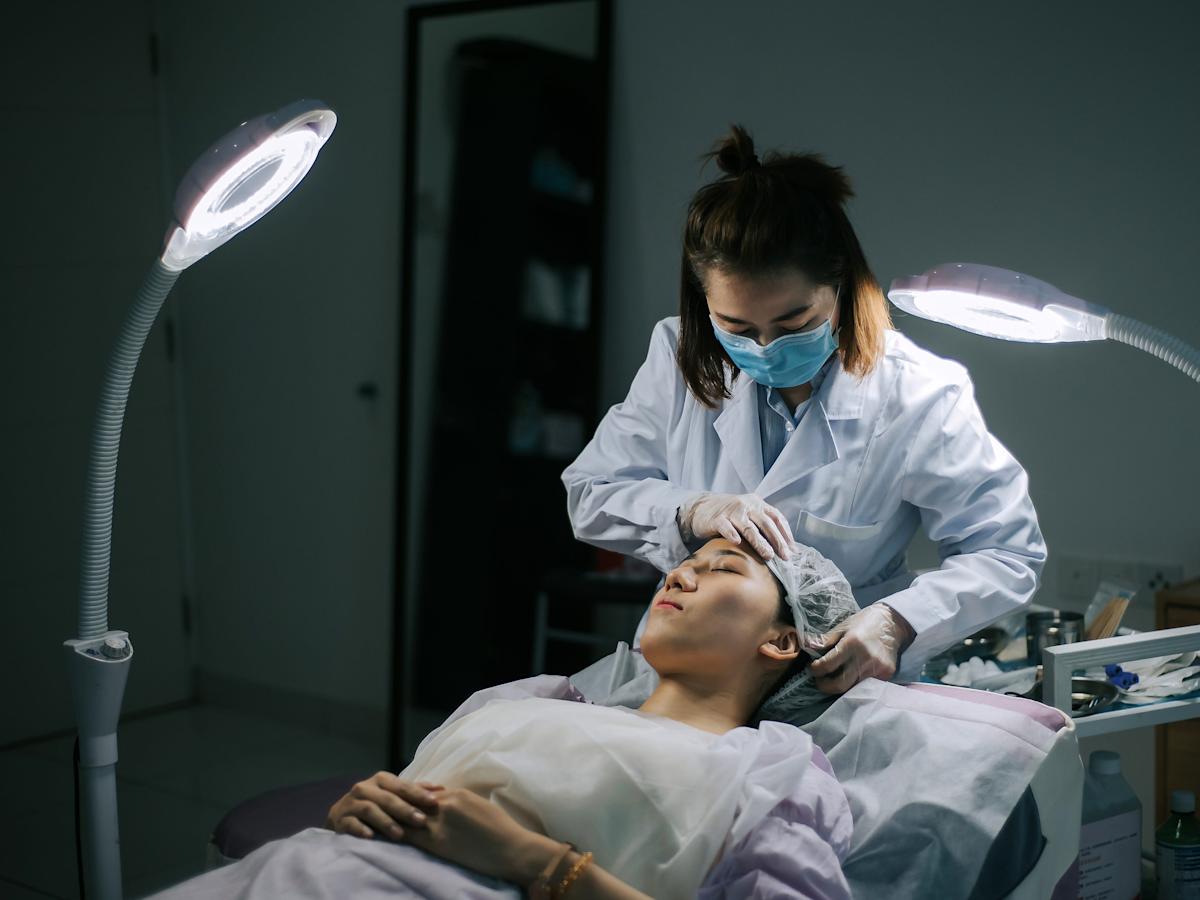
A Plastic Surgeon Prometric Exam can feel very different from work in a clinic. You might understand the rules of surgery be able to spot problems and have a lot of experience. Still a written case study can make you look at many hints before choosing the one correct answer.
That is why many people find out that being good at surgery and being good at answering exam questions are two abilities.
For surgeons getting ready, for GCC licensing exams in 2026 the main thing is to mix life medical knowledge with understanding the questions practicing under time limits and going over the material in a clear way.
The Moment Everything Changed
Imagine a Plastic Surgeon who has spent years taking care of wounds, burns, injuries, reconstructive surgeries and problems that happen after surgery.
At first simple questions seem easy to answer. But the hard questions have details: the patients age, how the injury happened, when it occurred what the exam showed what the lab tests said and what treatments were done before.
All a sudden the challenge is no longer simply:
"What do I know about this condition?"
Instead it is:
"What is the question really asking me to find out or do next?"
That difference can make an impact, in a computer-based licensing exam.
Why Prometric Vignettes Can Be Challenging
Clinical vignettes often test application rather than simple recall.
For example, instead of asking for the definition of a burn classification, a question may describe a patient's injury and ask about the most appropriate management.
Similarly, a trauma vignette may provide several apparently important details. However, only one or two may actually determine the correct answer.
Therefore, candidates should develop the habit of identifying:
- The patient's main clinical problem
- Important positive findings
- Important negative findings
- Timing of the condition
- Previous treatment
- The immediate clinical priority
- What the question specifically asks
As a result, you spend less time being distracted by unnecessary information.
What the “Redemption” Looks Like
After an unsuccessful practice session, the Plastic Surgeon changes the preparation strategy.
First, instead of rushing through hundreds of questions, every incorrect answer is analyzed.
Next, the candidate creates an error notebook containing:
Question → Mistake → Correct concept → Reason for mistake → Revision date
Furthermore, questions are divided into categories such as burns, trauma, wound management, reconstructive surgery, hand surgery, craniofacial conditions, complications, and postoperative care.
Gradually, previously confusing vignettes become easier to interpret.
The Same Strategy for Different GCC Exams
Plastic Surgeons may search for different licensing pathways depending on where they intend to work. Common GCC examination keywords include:
- DHA Plastic Surgeon Prometric Exam – Dubai
- DOH / HAAD Plastic Surgeon Exam – Abu Dhabi
- MOH / MOHAP Plastic Surgeon Exam – UAE
- SCFHS / Saudi Licensing Exam / SLE – Saudi Arabia
- QCHP Plastic Surgeon Exam – Qatar
- NHRA Plastic Surgeon Exam – Bahrain
- OMSB Plastic Surgeon Exam – Oman
However, these authorities do not necessarily use identical examination procedures. For example, DHA's current professional licensing pathway identifies CBT assessment by Prometric when required, while DOH's published examination procedure uses Pearson VUE for its CBT examination process.
Therefore, candidates should confirm the current requirements for their specific professional title and destination before booking an examination.
Practice the Question, Not Just the Topic
One of the biggest preparation mistakes is studying only by subject.
Instead, practice clinical vignette interpretation.
When solving a question, ask:
- What is the patient's primary problem?
- Which finding is most significant?
- What is the question asking?
- Are they asking for diagnosis, investigation, management, or complication?
- Which option represents the most appropriate answer?
Moreover, after answering, read the explanation—even when you selected the correct option.
That way, one MCQ becomes a learning exercise rather than merely a score.
Timed Mock Tests Build Exam Readiness
Knowledge alone does not guarantee that you will use your time effectively.
Therefore, introduce timed practice progressively.
Start with topic-based questions. Then move to mixed questions. Finally, complete full-length simulated examinations under time pressure.
For candidates following the DHA pathway, the authority provides a dedicated Prometric CBT process and eligibility ID system.
Consequently, becoming comfortable with computer-based testing can be an important part of preparation.
Don't Memorize Every “Repeated Question”
Searching for Plastic Surgeon Prometric repeated questions is understandable. Nevertheless, relying exclusively on memorized questions has limitations.
Exam content and licensing requirements can change. Additionally, a familiar clinical concept may appear in a completely different vignette.
Therefore, use MCQs to develop:
- Clinical reasoning
- Pattern recognition
- Decision-making
- Time management
- Knowledge retention
In other words, understand the answer instead of memorizing the letter of the answer.
A Practical 2026 Preparation Routine
A simple weekly routine can look like this:
Monday–Thursday: Specialty revision + 30–50 MCQs daily
Friday: Review incorrect questions
Saturday: Timed mixed mock test
Sunday: Revise weak areas and clinical concepts
Furthermore, candidates should regularly update their error notebook.
With consistent practice, the objective changes from simply completing questions to understanding why each answer is correct.
Frequently Asked Questions
1. Which GCC licensing exams can Plastic Surgeons encounter?
Depending on the destination, candidates may encounter DHA, DOH/HAAD, MOH/MOHAP, SCFHS/SLE, QCHP, NHRA, and OMSB licensing pathways.
2. Is every GCC Plastic Surgery exam a Prometric exam?
No. Examination providers and assessment methods vary by authority and professional category. DHA identifies Prometric for required CBT assessments, while DOH's published CBT process uses Pearson VUE.
3. What makes Plastic Surgeon vignettes difficult?
They can combine multiple clinical details and require you to identify the most relevant information before choosing the appropriate diagnosis, investigation, or management.
4. Should I study textbooks or MCQs?
Both have a role. Use textbooks or trusted references to build understanding, and then use MCQs and mock tests to apply that knowledge under examination conditions.
5. How can I improve my performance on difficult questions?
Slow down enough to identify the key clinical clues, determine exactly what the question asks, eliminate clearly inappropriate options, and review the explanation afterward.
Conclusion
The important thing I learned from taking a hard Plastic Surgeon Prometric Exam is that having good surgical knowledge is not enough. You also need to know how to take the exam. Clinical cases help people who can spot clues use what they know and make choices quickly.
If you are getting ready for DHA, DOH/HAAD, MOH/MOHAP SCFHS/SLE, QCHP, NHRA or OMSB always check the rules for your license and exam with the right organization.
For a way to study Prometric Exam Online has study materials, new multiple choice questions, answers and practice tests for people who need to pass healthcare exams. Go to www.prometricexamonline.com to see what is available and plan your study, for the Plastic Surgery exam.
Categories
- Endocrinology
- SMLE Saudi Prometric Exam
- MOH Exam
- QCHP
- Cardiologist Prometric Exam
- MOH Sharjah Exam
- SCFHS
- Qatar Prometric Exam
- Dental Prometric Exam
- QCHP Orthodontist
- OMSB Optometrist Prometric Exam
- DHA Physiotherapist Exam
- DHA Dietitian Nutrition Exam
- DHA Prometric Exam
- DHA Exams in Radiology
- Prometric Exam in Gulf Countries
- Kuwait MOH Prometric Exams Preparation
- Saudi Prometric Exam Questions
- Prometric Exam
- HAAD Exam
- General Guidelines
- DHA